
International Workshop
AI-driven Approaches for Space Applications: Challenges, Opportunities, and Interdisciplinary Perspectives
16 June 2026
Within the 6th International Symposium on Dynamic Response and Failure of Composite Materials
Hotel Hermitage & Park Terme, Island of Ischia (Naples, Italy)
The rapid evolution of Artificial Intelligence (AI) is transforming the space sector, enabling advanced design, monitoring, control, and decision-making in extreme and complex environments. From autonomous systems to human-centered applications, AI is becoming a fly-wheel in cutting-edge space technologies. This workshop aims to bring together researchers, engineers, and practitioners to discuss recent advances, emerging challenges and groundbreaking approaches in the application of AI to space systems. A particular emphasis will be put on multidisciplinary interactions between computer science, materials, mechanics, fluidics, and human health in space environments.
Conference
6th International Symposium on Dynamic Response and Failure of Composite Materials
Topic Areas
Topics of interest include, but are not limited to:
- AI for Guidance, Navigation, and Control (GNC) of Space Systems
- AI-driven guidance, navigation, and trajectory optimization for spacecraft, in orbital, cislunar, and deep-space dynamical environments
- Learning-based and hybrid physics/AI control architectures (e.g., reinforcement learning, meta-learning, physics-informed NN) for spacecraft attitude, orbit, formation flying, and proximity operations
- Robust, safe, and trustworthy AI for spaceflight GNC, including state estimation, orbit determination, stability guarantees, and operation under uncertainty, sparse measurements, and real-time constraints
- AI for Earth observation from space
- AI for satellite-based environmental and surveillance monitoring
- AI-powered prediction and assessment of natural hazards
- Smart monitoring for sustainable use of natural resources
- AI for space microfluidics
- AI-driven modeling and control of microfluidic systems
- Intelligent lab-on-chip platforms for space experiments
- Machine learning for fluid behavior prediction and optimization in space environments
- AI for astronaut health monitoring
- AI-based monitoring of astronaut physiological and psychological health
- Predictive models for health risks in long-duration space missions
- Wearable systems and intelligent biomedical sensors for space applications
- AI for space mechanics and structures
- Machine learning for structural monitoring of aereospace structures
- Intelligent control and optimization of mechanical systems for spacecraft
- Data-driven approaches for mechanics of composite materials in space
- Cross-cutting and emerging topics
- Reliability, robustness, and trustworthiness of AI in space applications
- Digital twins for space systems powered by AI
- Physics-Informed Neural Networks in space applications
Keynote Speaker

The Inevitable Shift: Navigating the Journey to Satellite Autonomy
Abstract: History shows that every major industrial system, from the factory floor to the cockpit, follows a predictable evolutionary path: transitioning from manual craft to automated systems, and finally to full autonomy. While manufacturing and transportation have already crossed these thresholds, the satellite industry is currently at its own critical inflection point.
This keynote explores the "Big Cycles" of technological evolution, illustrating how the lessons learned in aviation and automotive industries are now converging on space systems. We will examine why Satellite Autonomy is no longer a speculative "if" but an immediate "when," driven by the arrival of key enablers like AI/ML and software-defined architectures. Attendees will gain a clear roadmap for this transition and understand how to position themselves at the forefront of the next logical step in orbital operations.
Biography: An On-Board Computer Engineer at the European Space Agency (ESA), Gianluca Furano specializes in ensuring satellites don’t just float aimlessly but actually “think”, a task made remarkably difficult by the radiation, extreme cold, and general unpleasantness of the vacuum. A veteran of the Data Systems Division since 2003, he is one of ESA’s "OGs" in the on-board AI and RISC-V movement, dedicated to ensuring the future of space tech isn't powered by the same microchips found in a 1980s microwave. His expertise spans the critical architecture of modern spaceflight, from making processors safe and secure to developing robust data protocols. With over 150 publications to his name, he is either a prolific contributor to the field or has colleagues who are exceptionally generous with their bylines. When he isn’t teaching satellites to be reliable, safe, and available space residents, he focuses on leveraging open-source hardware to make exploration more cost-effective. After all, space is expensive, and Gianluca is among the ones making sure the lights stay on and the computers keep running out there.
Organizers

Prof. Cosimo IERACITANO (Chair)
University of Naples “Federico II” (Italy)
cosimo.ieracitano@unina.it
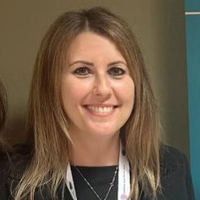
Prof. Nadia MAMMONE (co-Chair)
University Mediterranea of Reggio Calabria (Italy)
nadia.mammone@unirc.it
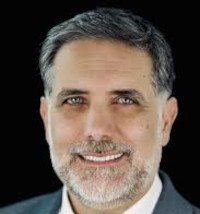

Prof. Victor RODRIGUEZ-FERNANDEZ (co-Chair)
Universidad Politecnica de Madrid, Spain
victor.rfernandez@upm.es

Dr. Piergiorgio LANZA (co-Chair)
Thales Alenia Space Italia, Italy
Piergiorgio.Lanza@thalesaleniaspace.com

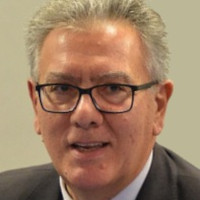
Prof. Francesco Carlo MORABITO (co-Chair)
University Mediterranea of Reggio Calabria (Italy)
morabito@unirc.it
Important Dates and Venue
Abstract Submission (1 page): March 30, 2026
Notification of Acceptance: April 10, 2026
Full Paper Submission (6-10 pages): May 10, 2026 - not mandatory*
Workshop Date: June 16, 2026
Venue: Hotel Hermitage & Park Terme, Via Leonardo Mazzella, 80, 80077, Island of Ischia , Naples (Italy)
* required only for publication in the Springer-edited book or for the Special Issues.
Submission Guidelines and Options
Abstract (1 page): Presented at the workshop; not included in the proceedings. Template Latex - Word
Full paper (6-10 pages): Presented at the workshop and included in the conference book edited by Springer (Scopus indexed). Template Latex - Word .
Submission instructions: authors are requested to submit their paper/abstract via email to cosimo.ieracitano@unina.it and nadia.mammone@unirc.it with subject: [AI4SPACE2026] Paper/Abstract Submission – Name Surname (Corresponding Author)
Journal paper opportunity
Selected papers will be considered for publication in: Journal of Progress in Aerospace Sciences (IF 16.2)
Workshop Registration Fees
| Registration Options* | Early Bird (before April 30, 2026) | Late (after April 30, 2026) |
|---|---|---|
| Regular Participant | 300 € | 350 € |
| Phd Student | 250 € | 300 € |
Registration Instructions
The registration payment is possible through Bank Transfer:
Headed to: Associazione DRAF
Tax code: 95256910639
IBAN: IT44B0306909606100000157731
Swift Code: (BIC) BCITITMM
Please, write "Draf2026 Registration_SURNAME" in the reason of the payment.
We kindly ask all participants to send an email to info@drafconference.com in order to inform us that the payment has been made.
For full DRaF2026 conference participation and registration fees options, please visit: https://www.drafconference.com/registration-and-paper-submission/
Powered by
 |
 |
 |
 |
 |
 |
 |
 |
 |