Workshop — IEEE WCCI 2026
AI-driven innovation in Neurotechnologies
Venue
Maastricht Exhibition & Congress Centre (MECC), Forum 100, 6229 GV Maastricht, The Netherlands
Motivation & Scope
Neural engineering sits at the frontier between neuroscience, artificial intelligence, and biomedical engineering. The field increasingly relies on computational intelligence (CI) methods, such as neural networks, reinforcement learning, evolutionary computation, and explainable AI, to model, interface with, and augment neural systems. This workshop aims to bring together researchers from computational intelligence, neuroscience, neuroprosthetics, and biomedical signal processing to foster dialogue and collaboration. Topics include brain–computer interfaces (BCIs), neuro-inspired AI architectures, adaptive neuromodulation systems, and data-driven modeling of neural dynamics. By aligning with the WCCI themes, the workshop emphasizes the cross-fertilization between computational models of intelligence and biological neural systems. The event will provide a platform for presenting emerging research, discussing methodological challenges, and shaping future interdisciplinary directions at the intersection of AI and neural engineering.
Organizers
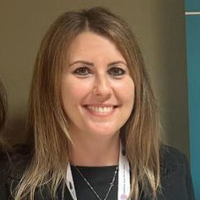
Prof. Nadia Mammone
University Mediterranea of Reggio Calabria (Italy)
nadia.mammone@unirc.it

Prof. Maryam Alimardani
Vrije Universiteit Amsterdam (the Netherlands)
m.alimardani@vu.nl

Prof. Anna Esposito
University of Campania “Luigi Vanvitelli” (Italy)
anna.esposito@unicampania.it

Prof. Cosimo Ieracitano
University of Naples “Federico II” (Italy)
cosimo.ieracitano@unina.it
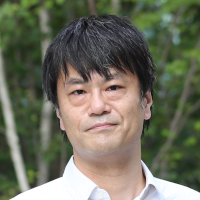
Prof. Toshihisa Tanaka
Department of Electrical Engineering and Computer Science, Tokyo University of Agriculture and Technology (TUAT)
tanakat@cc.tuat.ac.jp
Invited Keynote Speakers

Technical Program
Room: 2.2 Zambezi (program )
09:00 - 09:15
Welcome from the Workshop Organizing Committee, from INNS AINE Section and from SIREN
09:15 - 10:00
Invited Keynote Speech: "Life Inside the Machine: A New Direction for Intelligence"
Prof. Reinhold Scherer, University of Essex, UK
10:00 - 10:15
Energy-Aware Hyperdimensional Computing for EEG-Based ADHD Classification
Simone Colella, Federica Colonnese, Antonello Rosato and Massimo Panella
10:15 - 10:30
Effects of Electromyographic Artifacts on Speech Decoding from Intracranial Electroencephalogram
Shoya Murakami, Yu Watanabe, Shuji Komeiji, Tatsuya Takei, Takumi Mitsuhashi, Yasushi Iimura, Hiroharu Suzuki, Hidenori Sugano, Koichi Shinoda, and Toshihisa Tanaka
10:30 - 10:45
Distilling Attention: Cross-Architecture Knowledge Distillation for Efficient EEG-Based Motor Imagery Classification
Jan Korczyński, Maryam Alimardani
10:45 - 11:00
BandVQ: Band-Wise Vector-Quantized EEG Foundation Model
Jamiyan Sukhbaatar, Satoshi Imamura, and Toshihisa Tanaka
11:00 - 11:30
Coffee Break
11:30 - 11:45
Stacked LoRA for Subject-Adaptive EEG Foundation Models in Motor Imagery Decoding
Aymen Sarhane, Fouad Lbakali, Mouad Souissi, Jonathan Lys, and Giulia Lioi
11:45 - 12:00
An explainable deep learning framework for trustworthy EEG signal decoding
Natale Laganà, Cosimo Ieracitano, Muhammad Suffian, Francesco C. Morabito, Nadia Mammone
12:00 - 12:15
Toward a Systemic Neuroprosthetic Paradigm: Insights from Traditional Chinese Medicine for Next-Generation Brain–
Computer Interfaces
Haiyan Wang, Yanmei Wang, Zixiang Tang, Yucheng Wu, Yanbing Wang
12:15 - 12:30
Learning the dimension of BiMap layers in SPD networks
Yacine Meftah, Marco Congedo, and Laurent Bougrain
12:30 - 12:45
Acting on Uncertainty: Adaptive Neural Interfaces for Robust Cognitive Control
Patrick O. Akinwumi, Itunu Olaniran Akande, Meihua Qian, Oyinkansola A. Babatope
12:45 - 13:30
Lunch
13:30 - 14:15
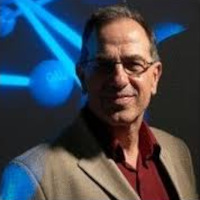
Invited Keynote Speech: "Brain-inspired Neurotechnologies for Predictive Modelling in Health"
Prof. Nikola Kasabov Auckland University of Technology, Computer Science, Auckland, New Zealand
14:15 - 14:30
Classifier-Targeted Threshold Optimization for Unsupervised Spiking Neural Networks
Razvan-Gabriel Petec, Pierre Tirilly, Ioan Marius Bilasco, and Grigoreta Sofia Moldovan
14:30 - 14:45
Sampling Matters: An Empirical Study of Point Cloud Sampling Strategies for Brain MRI-Based Alzheimer’s Disease
Classification
Towhidul Islam, Jumana Alqudah, Hadeel Saad Alghamdi, David J Brown, Mufti Mahmud
14:45 - 15:00
Closing Remarks & Best Oral Presentation Award
Call for Papers
We invite submissions of original research papers and short papers on innovative applications and methods at the intersection of computational intelligence and neural engineering. The workshop aims to highlight advances in modeling, analysis, and interfacing with neural systems through AI.
| TOPICS OF INTEREST INCLUDE (BUT ARE NOT LIMITED TO): | |
| Deep learning for neural data decoding and analysis | |
| Machine learning for brain–computer interfaces and neurotechnologies | |
| Foundation models and self-supervised learning for neural signals | |
| Neuromorphic computing and neuro-inspired models | |
| Explainable AI for neuroscience and clinical applications | |
| Hybrid biological-artificial neural systems | |
| Reinforcement learning and adaptive control in neuroprosthetics | |
Important Dates and Instructions
-
Abstract submission (one page) new deadline: 22 April 𝟮𝟬𝟮𝟲
Abstracts must submitted by email to nadia.mammone@unirc.it and cosimo.ieracitano@unina.it with email subject:[AI4NE-WCCI2026] Abstract submission -
Acceptance notfication: 28 April 𝟮𝟬𝟮𝟲
-
Deadline for early bird registration to WCCI 2026: : 1 May 2026
for details https://attend.ieee.org -
Authors of accepted abstracts can submit, by 22 May 2026 a full paper (10-15 pages in Latex or Word Springer format, prepared according to the Springer Guidelines ) to be included in the Workshop Proceedings (that will published in Springer-edited, Scopus-indexed book). Full papers must be submitted by email to nadia.mammone@unirc.it and cosimo.ieracitano@unina.it with subject:
[AI4NE-WCCI2026] Full Paper
Selected papers will have the opportunity to submit an extended version to the following Special Issue of MDPI Sensors Journal .
Contact
For further information or questions concerning the workshop, please contact the workshop organizers at:
nadia.mammone@unirc.it
and
cosimo.ieracitano@unina.it